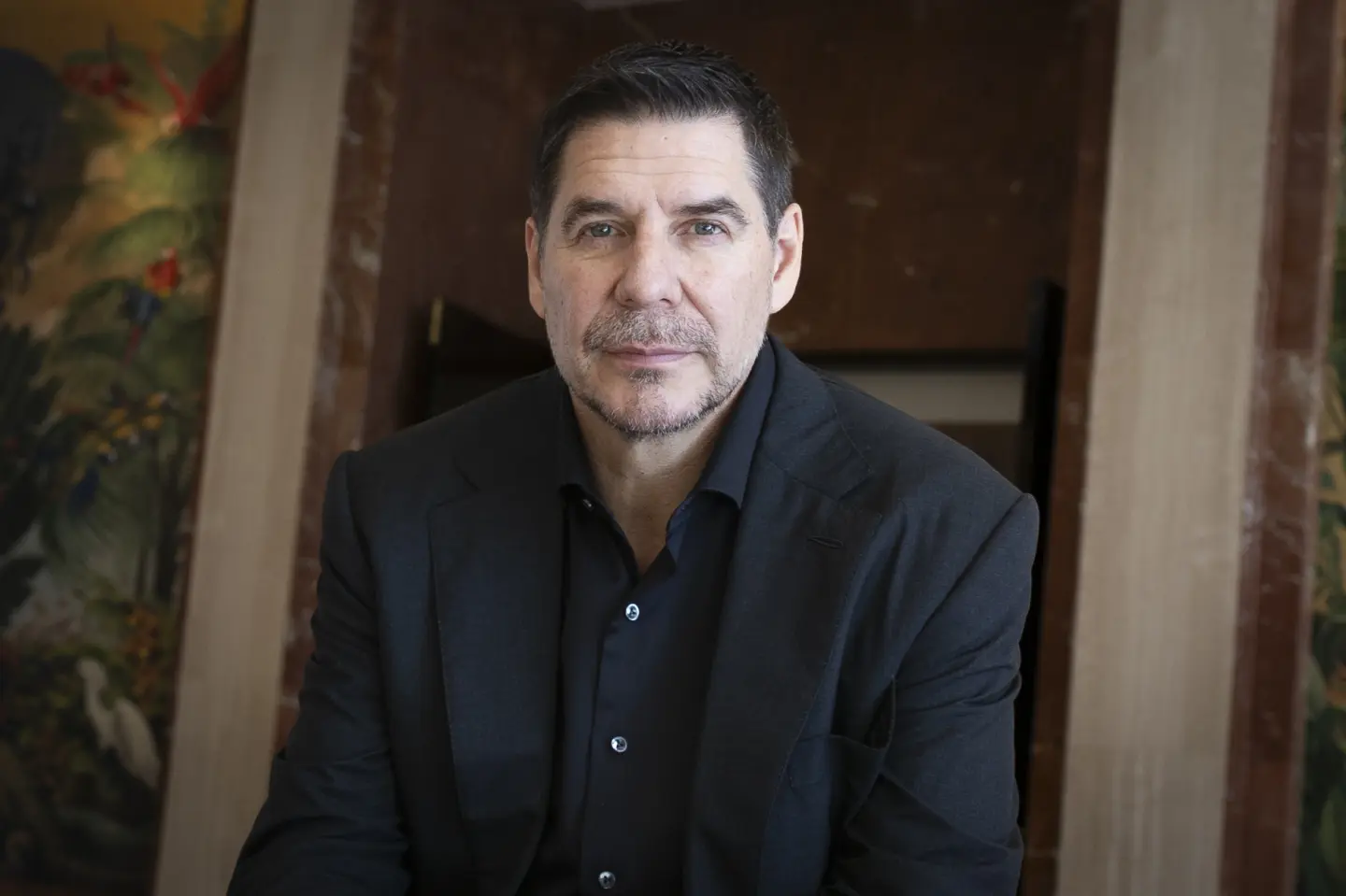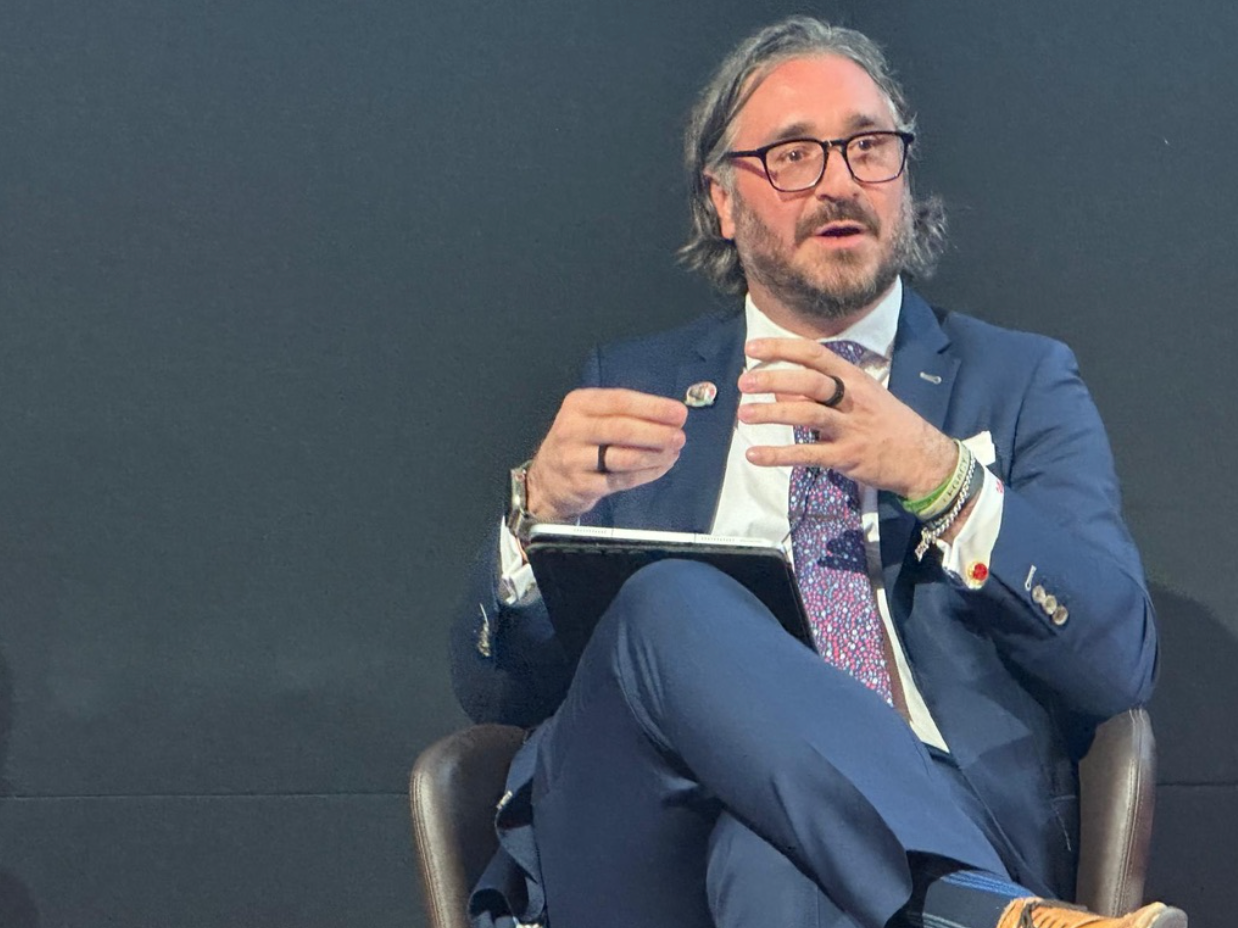
Sergio Fernández de Córdova is a Peruvian-born, United States–raised entrepreneur, institution builder, and global strategist whose work at PVBLIC Foundation and across a broader ecosystem of initiatives focuses on designing frameworks that enable governments, United Nations agencies, businesses, philanthropy, academia, technology leaders, and civil society to work together in pursuit of resilient, future-ready development. As Founder and Executive Chairman of PVBLIC Foundation, he has helped build a global implementation platform operating across four interconnected pillars—Nature, Technology, Capital, and Multilateralism—advancing initiatives that strengthen sovereign capacity, accelerate responsible technology transfer, mobilize innovative financing, and foster international cooperation in more than 125 countries.
Building What Didn’t Yet Exist
Long before he was working with governments, United Nations agencies, family offices, or global institutions, Sergio Fernández de Córdova was simply a young entrepreneur fascinated by one question:
What if the solution doesn’t exist yet?
It is a question that has quietly shaped every chapter of his life.
Born Sergio Alonso Fernández de Córdova y de Veyga in Lima, Peru, he immigrated to the United States as a child, where he quickly embraced the opportunities and challenges of building a new life. At just twelve years old, he launched his first entrepreneurial venture, discovering early that creating something meaningful often meant stepping beyond established paths rather than following them.
While many entrepreneurs spend their careers refining existing ideas, Fernández de Córdova found himself repeatedly drawn toward opportunities that required creating entirely new frameworks. A common thread emerged: identifying connections others had not yet made, and bringing together people, institutions, and ideas that traditionally operated independently.
Over time, that instinct evolved into something much larger than entrepreneurship. It became a lifelong commitment to building the systems that enable collaboration itself — a perspective that would transform an entrepreneur into a builder of platforms, partnerships, and institutions designed not simply to respond to today’s challenges, but to anticipate what tomorrow would require.
From Entrepreneur to Institution Builder
Entrepreneurship was never simply about building companies for Fernández de Córdova. It became the laboratory in which he learned how ideas move from vision to execution.
Among his early ventures was Fuel Outdoor, an outdoor advertising company that grew rapidly into one of the largest privately held firms in its sector before attracting institutional investment and ultimately being acquired. The company’s growth drew national attention and helped establish Fernández de Córdova as one of a new generation of entrepreneurs whose ability to recognize emerging opportunities extended beyond conventional business models. His entrepreneurial journey and leadership have since been featured by publications including Fortune, Bloomberg, The New York Times, Entrepreneur, Inc., and Adweek.
Along the way, he deepened that practical education formally — studying at Rutgers University, completing the Birthing of Giants entrepreneurship program at the Massachusetts Institute of Technology, and earning diplomas in International Law of the 21st Century and Diplomacy 4.0 from the United Nations Institute for Training and Research (UNITAR) — a progression that mirrored the arc of his career, from building companies to understanding institutions.
Yet the greatest lesson did not come from the company’s growth. It came from understanding what made growth possible. Building a business required more than capital. It required bringing together people with different expertise, aligning competing interests, earning trust, and creating a shared vision capable of moving from concept to execution.
As his career evolved, he began to recognize that many of the world’s most significant challenges were remarkably similar. The obstacle was rarely a lack of ideas, capital, or technology. More often, progress stalled because governments, businesses, philanthropies, international organizations, and academic institutions were operating independently rather than collaboratively.
That realization fundamentally changed the direction of his career. Rather than focusing solely on building successful companies, Fernández de Córdova began applying the lessons of entrepreneurship to a far broader challenge: designing frameworks that enable diverse institutions to work toward shared outcomes.
Looking back, Fuel Outdoor was never the destination. It was the proving ground. It demonstrated that ambitious ideas become reality only when the right people, resources, and institutions are brought together with a clear purpose and the discipline to execute. That lesson continues to shape his work today.
Building the Systems the Future Requires
As Fernández de Córdova’s work expanded internationally, one pattern became increasingly clear.
The world was not lacking innovative ideas. Governments were developing policy. Businesses were advancing technology. Investors were deploying capital. Universities were producing research. International organizations were convening global dialogue. Yet meaningful implementation often remained fragmented.
The challenge was not a shortage of expertise. It was a shortage of connective infrastructure capable of bringing those pieces together into systems that could execute at scale.
That realization became the catalyst for the creation of PVBLIC Foundation. Rather than operating as a traditional nonprofit or advocacy organization, PVBLIC was designed as an implementation platform — a place where governments, United Nations agencies, business, philanthropy, academia, family offices, and civil society translate ambition into coordinated action.
Over time, that work evolved into four interconnected pillars that continue to guide the Foundation’s approach.
Nature recognizes that healthy ecosystems are not simply environmental assets but foundational infrastructure — the natural systems on which economies, food and water security, and entire communities ultimately depend.
Technology focuses on ensuring that innovation, artificial intelligence, geospatial intelligence, and digital infrastructure strengthen sovereign capacity. In practice, that means helping governments own and use their data, plan smarter cities, and respond faster to crises.
Capital mobilizes long-term investment beyond traditional finance, connecting private wealth, philanthropy, development finance, and innovative funding mechanisms so that sound projects are not lost waiting for funding.
Multilateralism reflects the belief that no single government, institution, or organization can solve today’s most complex challenges alone. Durable progress depends on trusted partnerships capable of aligning diverse stakeholders around shared outcomes.
Under Fernández de Córdova’s leadership, this approach has shaped platforms including the SDG Media Zone, co-hosted with the United Nations Department of Global Communications; the SDG Data Alliance; Family Offices for Sustainable Development; and the Development Bank for Resilient Prosperity — initiatives spanning sovereign data infrastructure, technology transfer, geospatial intelligence, and innovative financing across more than 125 countries.
Throughout that evolution, one principle has remained constant. The measure of success has never been the number of projects launched. It has been whether stronger systems were left behind, enabling governments, institutions, and communities to continue building long after any single initiative had ended.
For Fernández de Córdova, institutions matter because they outlive individuals. The most meaningful impact is rarely found in creating another program. It is found in building the frameworks that allow others to solve problems together, repeatedly, and at a scale no single organization could achieve alone.
Standing With Small Island Developing States
Few places illustrate Fernández de Córdova’s philosophy more clearly than his work with Small Island Developing States (SIDS), a group of 39 nations whose unique geographic, economic, and environmental realities have made them at once the world’s most environmentally exposed nations and some of its most important catalysts for innovation, resilience, and international cooperation.
For Fernández de Córdova, these nations are not defined by their size, but by their potential. Their success depends not on charity, but on equitable access to the data, technology, financing, and institutional partnerships that enable countries of any size to plan confidently for their future.
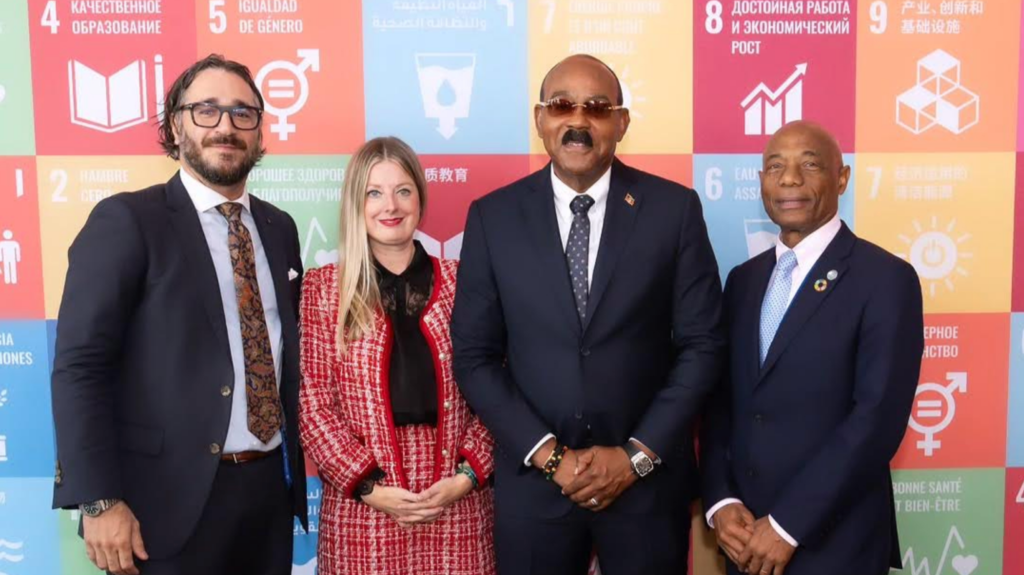
That belief has helped shape PVBLIC Foundation’s role as a founding partner of the SIDS Center of Excellence, established alongside the Alliance of Small Island States (AOSIS), the United Nations, and the Government of Antigua and Barbuda to support implementation of the Antigua and Barbuda Agenda for SIDS (ABAS), the ten-year development framework adopted in 2024.
Through initiatives such as the SIDS Global Data Hub, this collaboration is helping provide governments with the tools to make better-informed decisions by expanding access to geospatial intelligence, sovereign data infrastructure, innovative financing, and emerging technologies. The objective is simple but transformative: enabling a nation of a few hundred thousand people to plan, negotiate, and build with the same quality of information and strategic capacity as a nation of hundreds of millions.
For Fernández de Córdova, the SIDS agenda extends far beyond small island states. It demonstrates a broader principle that has shaped his life’s work: when the right institutions, trusted partnerships, and implementation frameworks are put in place, even the smallest nations can achieve outcomes once thought possible only for the largest. In that sense, SIDS represents not the margins of global development, but a blueprint for its future.
Connecting Unlikely Partners
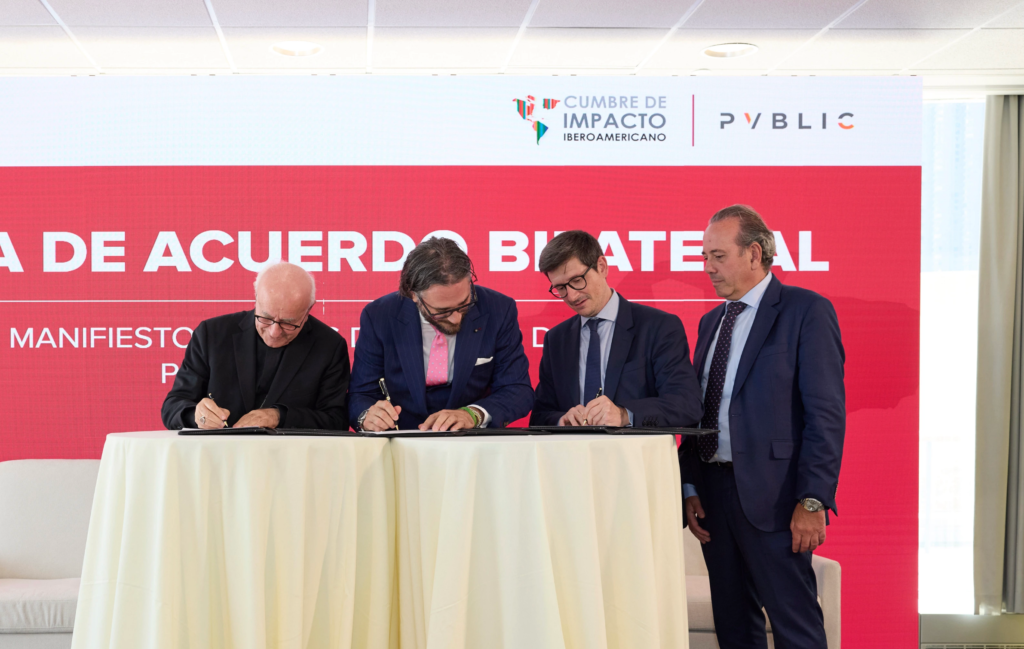
If there is one characteristic that defines Fernández de Córdova’s work more than any title or organization, it is his ability to bring together institutions that rarely find themselves at the same table.
Throughout his career, he has worked across governments, United Nations agencies, the White House, the Vatican, family offices, technology companies, academic institutions, civil society, and the private sector, helping transform unlikely relationships into practical partnerships capable of delivering measurable outcomes.
While these institutions often share common goals, they frequently operate under different mandates, incentives, timelines, and cultures. Governments think in terms of public policy. Businesses prioritize innovation and execution. Philanthropy focuses on long-term impact. Universities generate research. International organizations convene dialogue. Too often, those strengths remain disconnected.
Fernández de Córdova has treated collaboration not as an end in itself, but as a means to something more enduring: implementation. In his view, partnerships matter only when they produce measurable outcomes and leave behind stronger institutions capable of continuing the work long after the original participants have moved on.
Rather than asking how one institution can solve a problem, he has spent much of his career asking a different question:
How do we create the trusted framework that allows many institutions to solve it together?
That question has become a defining characteristic of his work and continues to shape the partnerships and platforms he helps build around the world.
A Hispanic Leader in a Changing World
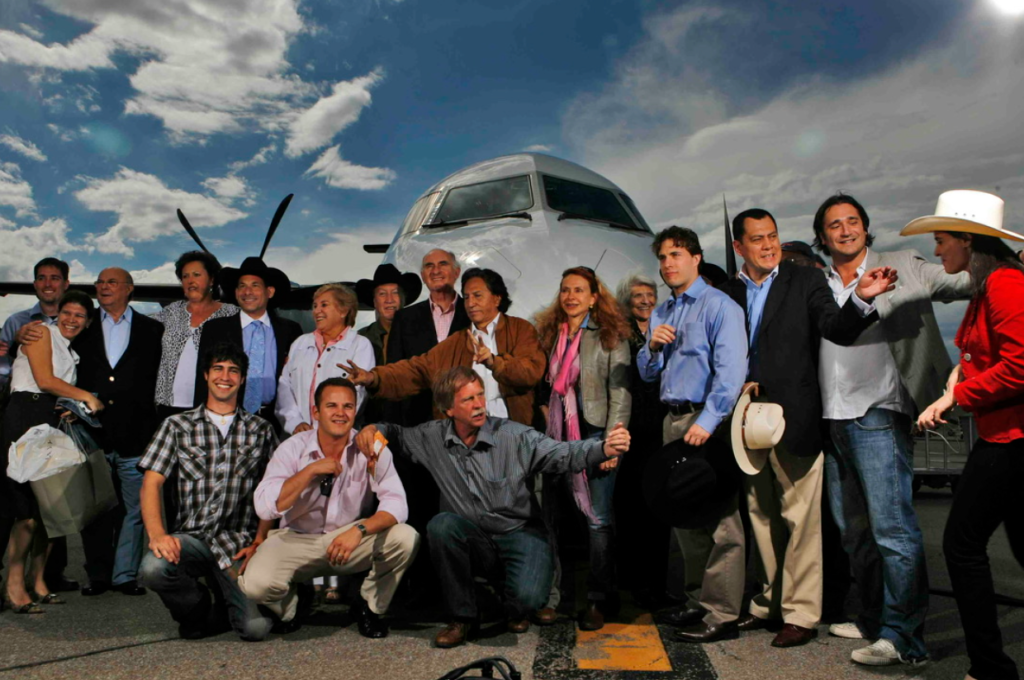
Fernández de Córdova’s career reflects a broader evolution of Hispanic leadership on the global stage.
Historically, Hispanic leadership has often been recognized for its contributions to entrepreneurship, business, culture, public service, and civic life. Today, that influence is increasingly extending into the design of international institutions, global partnerships, and long-term development.
Born in Peru and raised in the United States, Fernández de Córdova has often described his journey as one that shaped both his perspective and his sense of responsibility. While his work has become increasingly global, he has remained deeply connected to his Hispanic heritage and has consistently viewed his success as an opportunity to help expand what Latino leadership can represent on the world stage.
His perspective has also been shaped by a family legacy associated with centuries of public service and institution building. While his work is distinctly modern — spanning technology, development, finance, and multilateral cooperation — he has often viewed history not simply as something to preserve, but as a responsibility to help build what comes next. Rather than inheriting a legacy, he has sought to contribute to its next chapter by creating institutions designed to serve future generations.
He has often expressed the hope that his journey encourages young Hispanic leaders to see no limits on where they can contribute — whether in entrepreneurship, diplomacy, science, technology, public service, or international development. In his view, heritage is not simply something to celebrate. It is a foundation upon which each generation has the opportunity to build.
In that sense, his story is not simply one of personal achievement. It is part of a broader story about the growing role of Hispanic leadership in helping shape the future of international cooperation, resilient development, and the institutions that will define the decades ahead.

A Career Built on Trust
Throughout his career, Fernández de Córdova’s work has earned the trust of governments, international institutions, civic organizations, and historic institutions across multiple regions of the world.
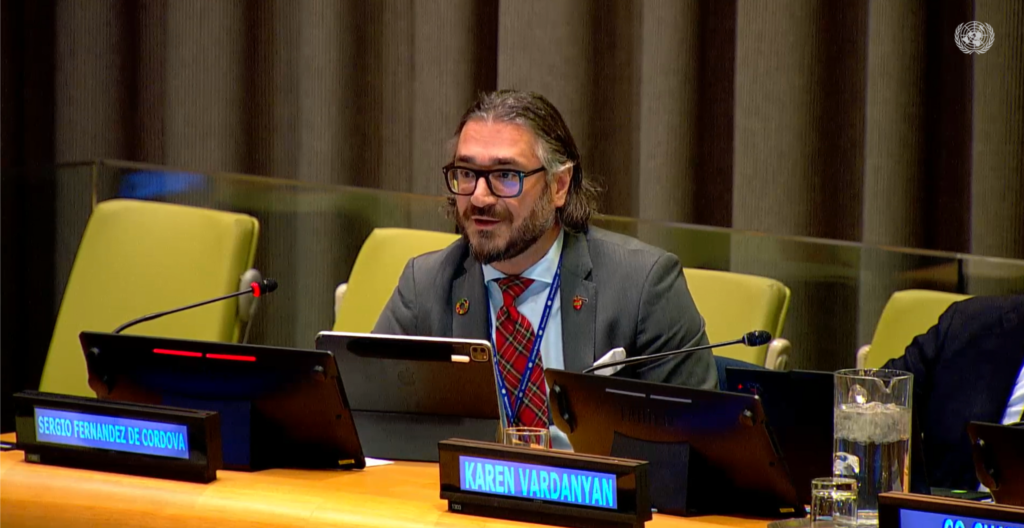
That trust has been reflected in roles and recognitions including his appointment as Ambassador and Permanent Observer to the United Nations General Assembly representing the International Youth Organization for Ibero-America (2022–2023), the Ellis Island Medal of Honor in the United States, personal recognition from Pope Francis, and knighthood conferred by institutions in Spain, Brazil, and Ethiopia.
Rather than defining his career, these acknowledgements reflect something more enduring: the confidence placed in his ability to bring together diverse institutions, align shared interests, and help transform ambitious ideas into meaningful implementation.
For Fernández de Córdova, trust has never been something to receive. It is something to earn, steward, and strengthen through service.

Leadership for an Interconnected World
The world is entering an era defined not by isolated challenges, but by interconnected ones. Economic resilience, environmental stewardship, artificial intelligence, public health, migration, finance, food security, space, and geopolitics increasingly shape one another — demanding solutions that extend beyond the mandate of any single institution, government, or sector. Yet many of the systems responsible for addressing these challenges were designed for a different time.
The next era of leadership will require something different: not disruption for its own sake, but the ability to strengthen, connect, and evolve the institutions that already shape our world — and to translate shared ambition into practical implementation.
Rather than asking what can be built within the limits of today’s institutions, Fernández de Córdova has consistently asked what institutions must become to meet the demands of tomorrow.
In an increasingly interconnected world, the greatest opportunities may no longer belong to those who build the biggest organizations, but to those who build the trust, partnerships, and systems that enable others to succeed together.